
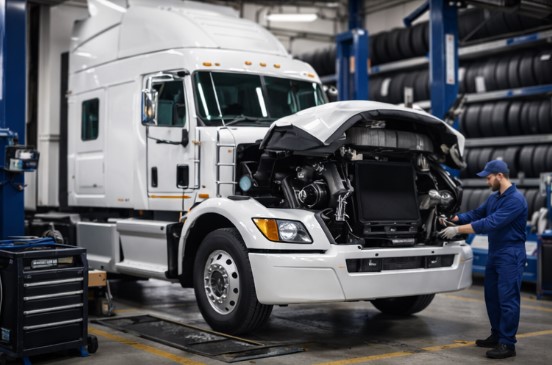
Trucks are the mechanical workhorses of our economy, carrying massive loads across thousands of miles of unpredictable terrain. Because these vehicles operate under extreme pressure and high tonnage, their tires are subject to levels of stress that standard passenger tires never encounter.
Neglecting specialized maintenance for these heavy-duty components doesn’t just lead to poor fuel economy; it creates significant safety risks for the driver and everyone else on the road. Prioritizing a rigorous tire care schedule is essential for managing the immense forces of friction and weight that trucks handle daily.
Managing Extreme Load-Bearing Demands
Unlike a typical sedan, a truck must distribute thousands of pounds of cargo across its axles, placing incredible vertical pressure on the tire sidewalls. If the tires are not specifically maintained to handle these ratings, the internal structure can weaken, leading to sudden and catastrophic failure.
- Check the Load Index on the sidewall to ensure the tires meet the maximum weight capacity of the vehicle.
- Inspect for “sidewall bulging,” which indicates that the internal plys are struggling under the current cargo weight.
- Monitor for heat buildup in the rubber, as overloaded tires generate friction that can lead to a fire.
Ensuring that your tires are rated for your specific hauling needs is the first step in heavy-duty safety. Consistent weight management prevents the rubber from reaching its breaking point during long-haul trips.
Precision Air Pressure Regulation
Maintaining the correct PSI is the single most important factor in truck tire longevity and fuel efficiency. Heavy-duty tires require higher pressures than passenger cars, and even a 10% drop in inflation can cause the tire to flex excessively, generating heat that destroys the casing.
- Use a high-quality commercial tire gauge to check pressures every morning before the tires have been driven.
- Adjust inflation based on the specific load weight and ambient temperature to prevent under-inflation.
- Inspect valve stems for metal caps and core leaks that can cause slow, undetected pressure loss.
Properly inflated tires provide a stable footprint, which is crucial for maintaining control during emergency braking maneuvers. This simple habit can extend the life of your tread by thousands of miles.
Monitoring Tread Depth for Traction and Safety
Trucks require deep, aggressive tread patterns to maintain grip on wet or icy roads, especially when navigating steep inclines. Because of the high torque generated by truck engines, the drive tires often wear down much faster than the steer tires.
- Use a tread depth gauge to ensure the rubber meets the legal minimum for commercial operations.
- Look for “flat spotting” or “cupping,” which suggests issues with the vehicle’s suspension or braking system.
- Check for “stone drilling,” where small rocks get trapped in the tread and eventually puncture the tire casing.
Adequate tread depth is your primary defense against hydroplaning when the weather turns foul. Regular inspections ensure that you have the biting edges necessary to move heavy loads safely through any environment.
Regular Rotation and Alignment Cycles
The sheer weight of a truck can cause the wheels to fall out of alignment quickly, leading to “feathering” or rapid wear on the outer edges of the tires. A consistent rotation schedule ensures that all tires across the various axles wear at an even rate.
- Rotate tires between the steer and drive positions to balance out the different types of stress they endure.
- Perform a professional alignment if the truck begins to “pull” to one side or if the steering wheel feels off-center.
- Check for “mismatched” duals, where one tire in a pair is slightly larger, causing it to drag and wear prematurely.
Balanced wear across all positions maximizes your investment and prevents the need for a premature full-set replacement. Keeping the wheels pointed in the right direction also reduces the rolling resistance that kills fuel mileage.
Visual Inspection for Road Hazard Damage
Trucks are frequently exposed to construction sites, loading docks, and debris-filled highway shoulders that can cause immediate physical damage. A daily “walk-around” allows you to spot embedded nails, deep gashes, or “zipper” cracks before they turn into a highway blowout.
- Search for cuts or snags in the tread area that may have exposed the internal steel belts to moisture.
- Remove any debris trapped between “dual” tires that could rub and cause a sidewall puncture.
- Inspect the wheel rims for cracks or bends that could compromise the airtight seal of the tire.
Early detection of physical damage can often mean the difference between a simple patch and a total tire loss. Staying proactive with visual checks is the best way to avoid being stranded on the shoulder of a busy interstate.
Maximizing Your Fleet’s Uptime and Safety
Commitment to heavy-duty tire maintenance is an investment in the reliability of your entire operation. By addressing the unique challenges of high-pressure inflation, extreme weight, and aggressive tread wear, you ensure that your truck remains a safe and efficient tool on the road.
These specialized care steps go far beyond basic maintenance; they are a necessary protocol for anyone handling the immense power of a heavy-duty vehicle. Taking the time to care for your rubber today ensures that your cargo arrives on time and your drivers return home safely every night.