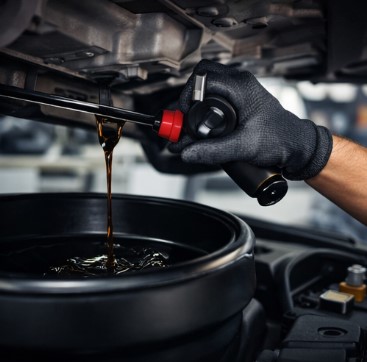
Motor oil serves as the lifeblood of your vehicle, providing the essential lubrication needed to keep hundreds of moving metal parts from grinding against each other. When you neglect a scheduled oil change, you aren’t just missing a maintenance appointment; you are actively allowing the internal environment of your engine to deteriorate.
The consequences of running on old, dirty oil can range from a slight dip in fuel efficiency to a catastrophic engine seizure that leaves your car stranded. Understanding the specific physical changes that occur beneath the hood will help you appreciate why this simple service is the most important investment you can make in your car’s longevity.
Beware of Engine Sludge Buildup
Over time, motor oil breaks down due to high heat and collects contaminants like carbon, dirt, and tiny metal shavings. This mixture eventually transforms from a slippery liquid into a thick, gel-like substance known as engine sludge.
- Look for a dark, crusty buildup on the underside of your oil fill cap as an early warning sign.
- Understand that sludge restricts the flow of oil to critical areas like the camshaft and crankshaft.
- Realize that once sludge forms, it acts like a sponge, soaking up the additives meant to protect your engine.
Allowing sludge to accumulate is like forcing your engine to pump molasses through its veins, putting immense strain on every internal component.
Prevent Excessive Internal Friction
Fresh oil creates a microscopic film that prevents metal-on-metal contact between the pistons and the cylinder walls. As the oil thins out and loses its viscosity, that protective barrier vanishes, leading to rapid wear and tear.
- Listen for ticking or tapping sounds coming from the engine bay during a cold start.
- Monitor your dashboard for an oil pressure warning light, which may indicate the oil is too thin to maintain pressure.
- Check your dipstick frequently to ensure the oil level hasn’t dropped due to “burning” off from high friction heat.
Without proper lubrication, the friction generated by thousands of revolutions per minute will quickly shave years off your engine’s lifespan.
Manage Rising Engine Temperatures
While the radiator and coolant handle much of the cooling, motor oil plays a vital role in carrying heat away from the combustion chamber. Old oil loses its thermal conductivity, meaning it can no longer effectively transfer heat to the oil pan for cooling.
- Watch your temperature gauge to see if the engine is running hotter than usual during normal commutes.
- Be aware that oxidized oil can actually trap heat inside the engine block rather than dissipating it.
- Note that consistent overheating can lead to warped cylinder heads or blown head gaskets.
Fresh oil acts as a secondary cooling agent that keeps the most intense heat zones of your engine within a safe operating range.
Combat Chemical Corrosion
Modern motor oil is packed with detergents and rust inhibitors designed to neutralize the acids produced during the combustion process. Once these additives are exhausted by extended use, those acids begin to eat away at the soft metal bearings and seals inside the engine.
- Recognize that “long-life” oils still have a limit to how much acidity they can safely neutralize.
- Check for small oil leaks under your car, which can be caused by acid-damaged gaskets and seals.
- Remember that moisture from short trips can mix with old oil to create even more corrosive byproducts.
By changing your oil, you are essentially refreshing the chemical defense system that prevents your engine from rotting from the inside out.
Avoid Total Engine Seizure
The ultimate “nightmare scenario” for any driver is a seized engine, which occurs when parts become so hot and friction-heavy that they literally weld themselves together. This usually happens when the oil is so old and depleted that it can no longer provide any separation between moving parts.
- Pay attention to any sudden loss of power or a loud “clunking” sound while driving.
- Realize that a seized engine typically requires a complete replacement, costing thousands of dollars.
- Understand that regular oil changes are the only reliable insurance policy against this type of total mechanical failure.
A seized engine is almost always a death sentence for a vehicle, turning a functional car into a heavy piece of scrap metal in seconds.
Protect Your Vehicle and Your Wallet
Prioritizing your scheduled oil changes is the most cost-effective way to ensure your vehicle remains reliable for years to come. By spending a small amount on preventative care now, you effectively dodge the massive financial burden of major engine repairs or a premature car payment.
The peace of mind that comes with a well-lubricated engine allows you to drive with confidence in any conditions. Your car is a complex machine that rewards consistency, and a fresh filter and oil are the best gifts you can give it.