
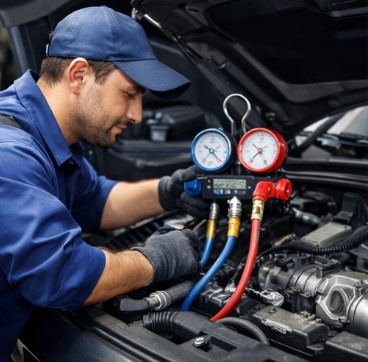
Navigating the sweltering humidity of a Troy summer becomes an endurance test when your vehicle’s air conditioning fails to perform. A cooling system that blows warm air isn’t just a matter of discomfort; it can lead to driver fatigue and internal damage to your car’s ventilation components.
Understanding the common culprits behind a failing AC unit helps you distinguish between a simple fix and a more complex mechanical repair. Addressing these issues early ensures that your commute remains a refreshing sanctuary away from the intense Michigan heat.
Check for Low Refrigerant Levels
The most frequent cause of a warm AC system is a lack of refrigerant, which is the specialized fluid responsible for cooling the air. Because the air conditioning is a sealed system, low levels usually indicate a small leak in a hose, seal, or connection that has developed over time.
- Look for oily residue around AC hose connections, which may signal a slow leak.
- Listen for the AC clutch clicking on and off rapidly, which often happens when pressure is too low.
- Avoid using “stop-leak” cans from a hardware store, as they can sometimes clog delicate internal valves.
Restoring the correct pressure and sealing leaks is the primary step in getting that crisp, cold air back into the cabin.
Inspect the Cabin Air Filter
A heavily clogged cabin air filter restricts the volume of air passing over the cooling coils, making the system work much harder for fewer results. Over a dusty summer in Troy, debris like pollen and road grime can accumulate and practically choke your ventilation system.
- Locate your filter, usually found behind the glove box or under the dashboard.
- Check if the filter material is grey, black, or filled with visible leaves and dust.
- Replace the filter annually to ensure maximum airflow and better air quality for your passengers.
Swapping out a dirty filter is one of the easiest and most effective ways to improve your vehicle’s cooling efficiency immediately.
Verify Cooling Fan Operation
Your car uses electric fans to pull air through the condenser located at the front of the vehicle, which removes heat from the refrigerant. If these fans fail to spin while you are sitting at a red light or idling in traffic, the AC will quickly turn from cold to lukewarm.
- Pop the hood while the AC is running to see if the fans behind the radiator are spinning.
- Notice if the air gets colder once you start driving at highway speeds, and air is forced in naturally.
- Watch for an uptick in your engine temperature gauge, as cooling fan issues can affect the entire engine.
Functional fans are essential for heat dissipation, especially when the vehicle isn’t moving fast enough to provide natural airflow.
Examine the AC Compressor
The compressor is the heart of the cooling system, responsible for pressurizing the refrigerant so it can circulate through the vehicle. If the compressor’s internal clutch fails to engage, the refrigerant won’t move, and the air coming out of your vents will remain at ambient temperature.
- Listen for a distinct “click” when you turn the AC to the “MAX” setting.
- Look for signs of rust or burnt metal on the front of the compressor pulley.
- Keep the system running periodically throughout the year to keep the internal seals lubricated.
A failing compressor is a significant mechanical issue that typically requires professional diagnostic tools to resolve safely.
Look for Condenser Blockages
The condenser sits right at the front of your car and looks like a small radiator, making it prone to collecting road debris or bugs. If the fins are crushed or covered in dirt, the heat exchange process is interrupted, leaving you with nothing but warm air.
- Spray the front of your vehicle with a garden hose to clear out bugs and dirt from the condenser fins.
- Check for physical damage from road stones that may have punctured the delicate aluminum tubes.
- Ensure there are no plastic bags or trash stuck in the grill area, blocking the intake.
Keeping the exterior of the cooling components clear is just as important as maintaining the interior fluids.
Restore Your Summer Driving Comfort
Ignoring a struggling air conditioning system only leads to more expensive repairs as the internal components experience unnecessary wear and tear. Taking the time to diagnose the root cause now will prevent a total system meltdown during the peak of the July heatwave.
Investing in your vehicle’s climate control ensures every trip through Troy is a pleasant experience regardless of the temperature outside. Maintaining a functional AC system preserves your car’s value and keeps you focused on the road ahead in total comfort.